From Viewership to Viral Campaigns: The Marketing Impact of the 2026 FIFA World Cup
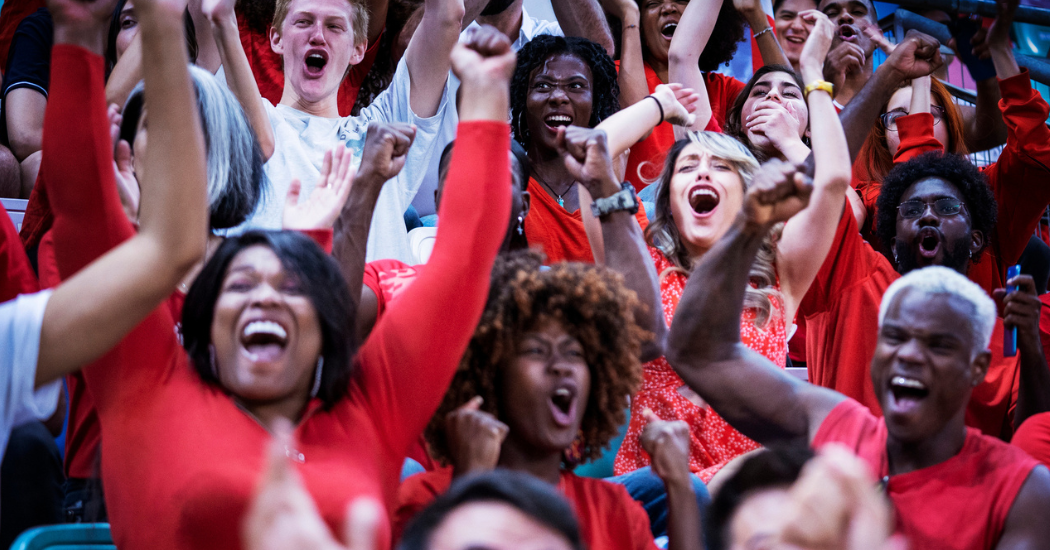
For decades, the FIFA World Cup has drawn massive global audiences, but domestically in the United States, interest in the sport the rest of the world calls “football” has historically lagged. That appears to have changed in 2026, as World Cup fever swept the country this summer. One driver is geography: North America hosted the tournament, with 75% of the matches taking place in the U.S. The tourist influx proved impossible to miss, and fans’ energy was contagious—from Norwegians rowing up escalators to Scots drinking Boston dry. Another factor was the success of the U.S. men’s team, which won more games (3) and scored more goals (11) in a World Cup tournament than any previous U.S. men’s squad. Together, that excitement created a major opportunity for marketers.
The first lift came from television viewership. FOX retained English-language broadcast rights for $485 million through an extension of its 2022 tournament deal, covering linear broadcasts on the FOX Network and streaming on Tubi and FOX platforms. NBCUniversal secured Spanish-language rights for $600 million, with linear coverage on Telemundo and streaming on Peacock. Soccer has traditionally been harder to monetize than sports like football, basketball, and baseball because the action has few natural breaks, limiting ad inventory largely to pre-game, halftime, post-game, and in-game interstitials. This year, FIFA gave broadcasters—and players—a boost by adding three-minute hydration breaks in each half, creating new in-game advertising opportunities.
Have the networks’ combined $1.085 billion investment paid off? It has. Viewership for the 104 match tournament more than nearly doubled from the 2022 tournament in Qatar. FOX reported an average of 7.7 million viewers per match, up 116%, while Telemundo/Peacock’s Spanish-language coverage averaged 6.3 million viewers per match, up 146%. The championship match on Sunday, July 19, featuring Spain and Argentina, became the most-watched soccer match ever in the U.S., drawing an average of 38.9 million viewers on FOX and more than 23.9 million viewers for the Spanish-language coverage on Telemundo and Peacock. At its peak, FOX drew 51.7 million viewers, which put this World Cup in a ratings realm only reached by the NFL playoffs and Super Bowl.
The final was only one part of the viewership story. U.S. team matches delivered strong results for FOX, averaging 9.8 million viewers per game and peaking at 33 million for the team’s round-of-16 loss to Belgium.
Beyond ratings, marketers tapped into World Cup enthusiasm with creative campaigns. Official FIFA World Cup sponsors such as Adidas, Frito-Lay, and Visa amplified their rights investments by featuring current and former stars including Lionel Messi, Jude Bellingham, and Christian Pulisic. David Beckham was nearly unavoidable, appearing in 10 World Cup-themed ads for brands including Adidas, Home Depot, Pepsi, Stella Artois, SharkNinja, and others. Several U.S. Men’s team players also stepped into the spotlight, most notably in Michelob Ultra’s campaign alongside Messi and other U.S. and Argentinian players.
One brand turned a sponsorship limitation into a viral win. Levi’s Stadium hosted several matches, including the U.S. vs. Paraguay group-stage game. But because Levi’s was not an official sponsor, FIFA’s clean-stadium policy required the brand to cover its iconic logo with a white tarp and use the temporary name “San Francisco Bay Area Stadium” during the tournament. While other venue sponsors complied quietly, Levi’s turned the restriction into a campaign. The brand covered the logo but preserved its recognizable shape, changed its social media profile picture to the covered version, and extended the idea to storefronts worldwide. One TikTok generated 9 million views. What began as a naming-rights constraint became Levi’s most commented-on and shared post ever, driving a 44% increase in mentions and nearly quadrupling engagement.
What can marketers learn from this year’s World Cup success?
- Tentpole events still matter, and sports remain among the most powerful. Because these audiences are still largely reached through linear TV, linear remains an important part of the media mix—especially for brands seeking incremental reach.
- Marketers should tap into cultural moments with relevant creative, using event-related themes, stories, and talent.
- Brands do not need official sponsorship status to participate effectively; well-executed cultural activation can still deliver outsized impact.
World Cup fever returns next summer with the FIFA Women’s World Cup in Brazil from June 24 to July 25. While the 2027 tournament will not have the same home-field momentum as the men’s event, it will feature a U.S. women’s team currently ranked second in the world and with a record four Women’s World Cup medals. And it will be televised exclusively on Netflix, a historic first that is sure to be a subscription and advertising boon for the streaming service. Don’t miss the moment!
Sources:
- World Cup final smashes U.S. TV records on both Fox and Telemundo. New York Times.
- FOX Records 38.937 M Viewers for FIFA World Cup 2026™ Final, Most-Watched Soccer Telecast in U.S. History, Fox Sports.
- Telemundo and Peacock Redefine Soccer Fandom in the US with Record-Breaking Audiences for Spanish-Language Coverage oF FIFA World Cup 2026™, NBC Sports.
Next article
07.23.26
July 2026 Media Impact Report
For decades, the FIFA World Cup has drawn massive global audiences, but domestically in the United States, interest in the sport the rest of the world calls “football” has historically lagged. That...
Read It